English
 French
 Spanish
 Italian
The Mekong Delta floating markets offer one of the most authentic ways to experience southern Vietnam. Instead of walking through a land market, travelers board a boat. They watch local traders buy and sell fruit, vegetables, breakfast, and daily goods on the river.
The experience usually begins before sunrise. As boats gather on the water, the Mekong Delta slowly comes alive. You hear engines, talk, cooking, and paddles moving across the river.
For travelers who want more than famous sights, Vietnam’s floating markets offer a more personal experience. They show local food and culture also reveal farming and daily life.
.jpg)
A beautiful view of a traditional boat traveling on the Mekong River in Vinh Long, Vietnam
An extensive network of rivers and canals shapes the Mekong Delta. Water is important not only for agriculture but also for transportation, trade, and daily life. This river-based lifestyle helped traditional floating markets develop across the region.
Today, visiting a floating market is about more than shopping. It is an opportunity to see how local communities have adapted their businesses to life on the water. Large boats carry farm products from nearby areas. Smaller boats travel between them and sell cooked food, drinks, coffee, and fresh fruit.
For first-time visitors, the experience can feel very different from a typical Vietnamese market. There are no crowded streets or rows of permanent shops. Instead, the market moves with the river, creating a lively and colorful scene that changes throughout the morning.
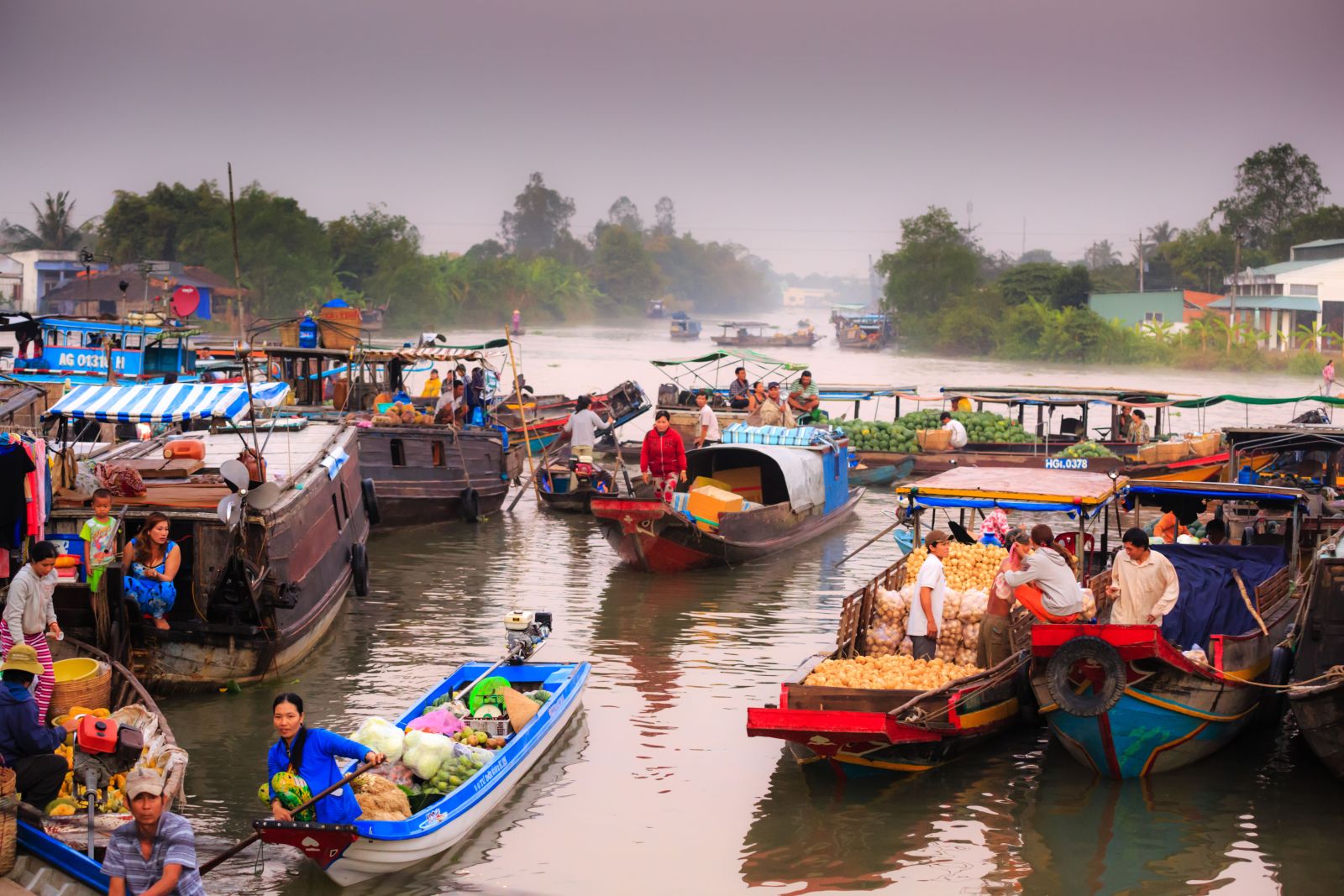
A bustling floating market scene featuring locals trading fresh produce from traditional boats on a tranquil river
Located near Can Tho, Cai Rang Floating Market is the best-known floating market in the Mekong Delta. It is also one of the easiest places for international travelers to experience traditional river commerce.
The best time to visit is early in the morning. Many tours leave Ninh Kieu Wharf before sunrise, allowing visitors to reach the market while traders are already arriving. As daylight increases, larger boats gather with piles of pineapples, watermelons, pumpkins, sweet potatoes, and other agricultural products.
One of the most interesting parts of the experience is watching the boats interact. Traders move around the river, customers approach different vendors, and smaller food boats serve breakfast to people passing through.
The market is particularly attractive to photographers. Morning mist, colorful produce, wooden boats, and the rising sun create a unique mood. You rarely find it anywhere else in Vietnam.
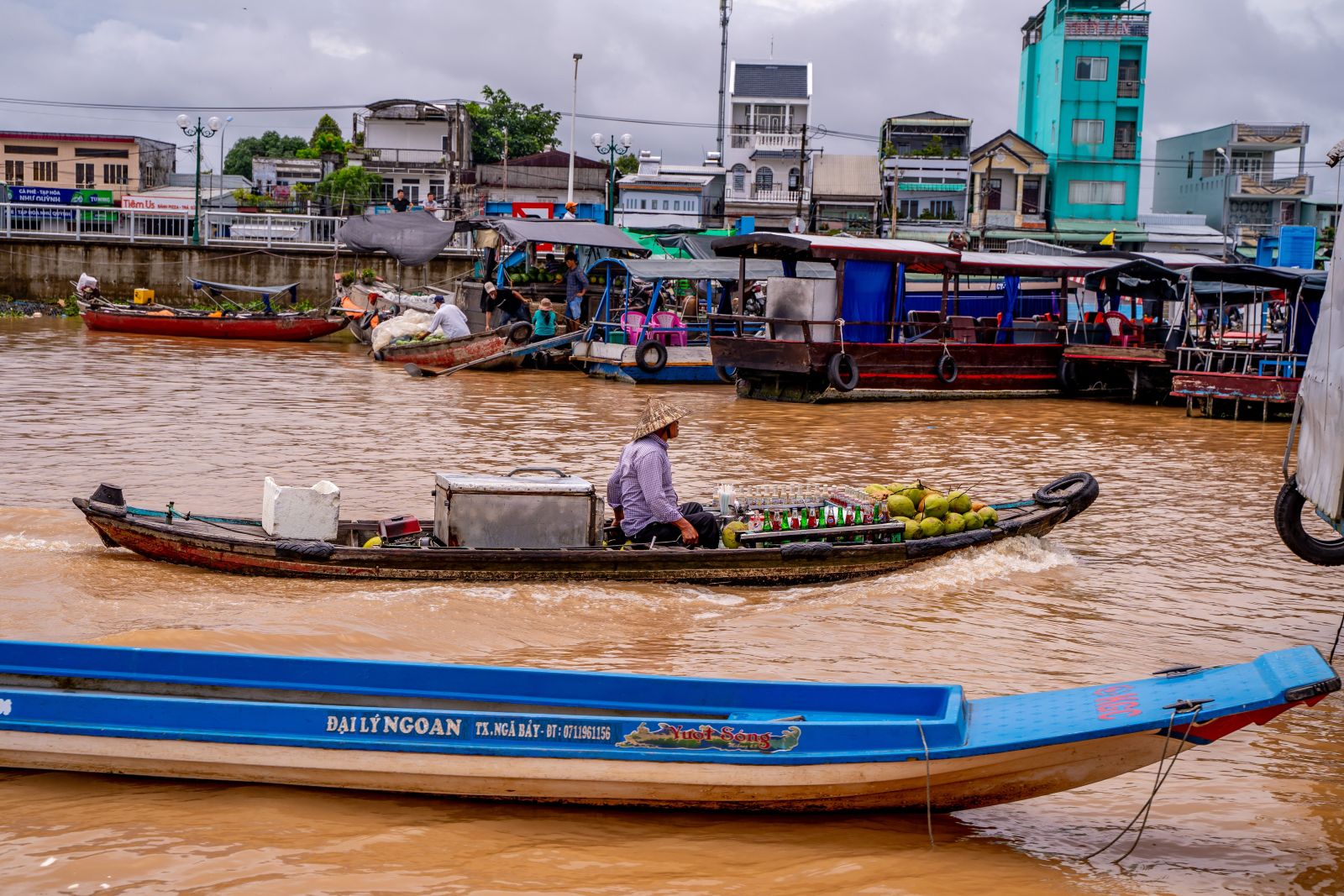
Discover the bustling activities of the Can Tho floating market, with its boats and fresh produce
One detail that visitors should look for at the floating markets is the "cây bẹo". This traditional bamboo pole acts as a simple signboard for each boat.
Vendors hang samples of the products they are selling from the pole. A boat selling pineapples may hang them from its "cây bẹo". Another trader may display vegetables or other farm products.
The system allows customers to identify products from a distance without relying on large signs or loud advertisements. It is a simple but clever example of how commerce developed around the Mekong River.
Watching the cây bẹo in action also makes the market easier to understand. Rather than a collection of random boats, the river becomes an organized trading space. Each vessel has a specific role.
.jpg)
"Cây Bẹo"
One of the most memorable things to do at the Mekong Delta floating markets is to have breakfast directly from a boat.
Small food boats prepare popular Vietnamese dishes while moving between larger trading vessels. One common choice is "hủ tiếu", a southern Vietnamese noodle soup served with meat, vegetables, herbs, and a flavorful broth.
Eating a hot bowl of noodles on a boat feels very different from eating breakfast in a restaurant. Around you, vendors continue working, boats pass by, and the river becomes increasingly busy as the sun rises.
You can also find other simple dishes and snacks depending on the market and season. The selection may change from one visit to the next, which adds to the charm of a working river market.
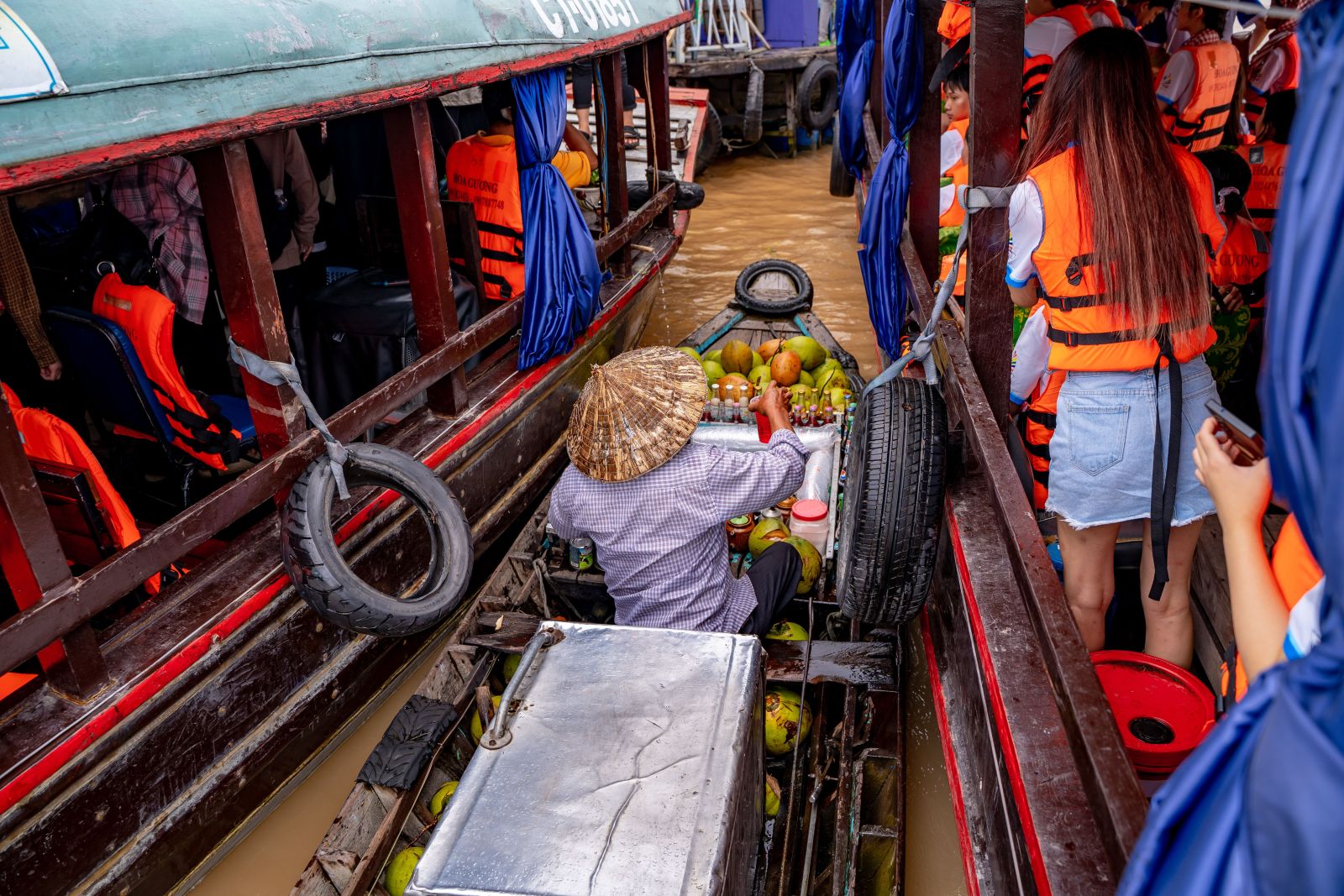
Cai Rang Floating Market is bustling with activities and vibrant colors in Can Tho, Vietnam
Coffee is another essential part of a morning in southern Vietnam. At some markets, small boats sell Vietnamese coffee directly to visitors and local traders.
Order a cup of strong Vietnamese coffee and take a few minutes to simply watch the activity around you. As the morning develops, the market becomes a fascinating mix of colors, sounds, and movement.
Some vendors prepare traditional coffee using a cloth filter, creating a strong and aromatic drink. Whether you like black coffee or coffee with condensed milk, you can enjoy it on the river. This makes the floating market experience even better.
You may also like: Mekong Delta Tours Recommendation: A 3-Day Itinerary And Some Newbie Tips
The Mekong Delta is one of Vietnam's most important agricultural regions, so fresh fruit is central to its markets.
Large boats often carry tropical fruits such as pineapples, mangoes, bananas, watermelons, and other seasonal produce. Some vendors will cut and prepare fruit for customers directly on their boats.
Fresh pineapple is particularly enjoyable during a morning market visit. Watching a vendor quickly peel and cut a pineapple before serving it gives travelers a simple but memorable taste of the region.
Beyond the food itself, the fruit boats show the connection between farming communities and the river. Produce grown in villages across the Delta can travel by water before reaching traders and customers.
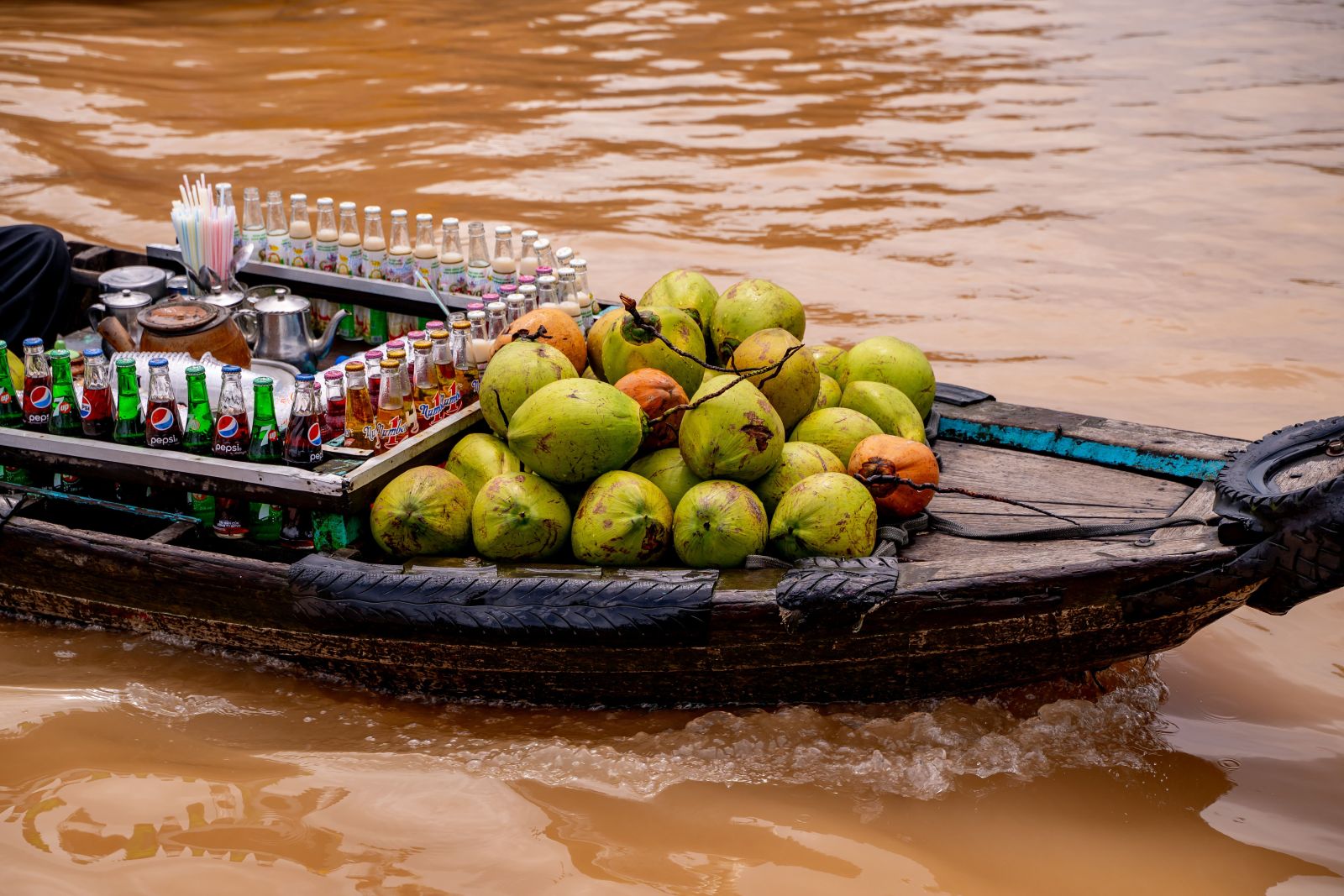
A boat selling coconuts and drinks at Can Tho floating market, Vietnam
While Cai Rang is the most famous destination, Cai Be Floating Market offers another way to explore the region.
Located in Tien Giang Province, Cai Be is surrounded by fruit-growing communities, canals, gardens, and rural villages. The area suits travelers who want to visit a floating market and enjoy the wider Mekong Delta.
After exploring the river, visitors can continue into the countryside by bicycle or sampan. Narrow canals wind through tropical gardens. Local villages offer chances to see traditional homes, small workshops, and farm activities.
Cai Be is less about spending a few hours at one market. It is more about seeing how waterways connect rural life.
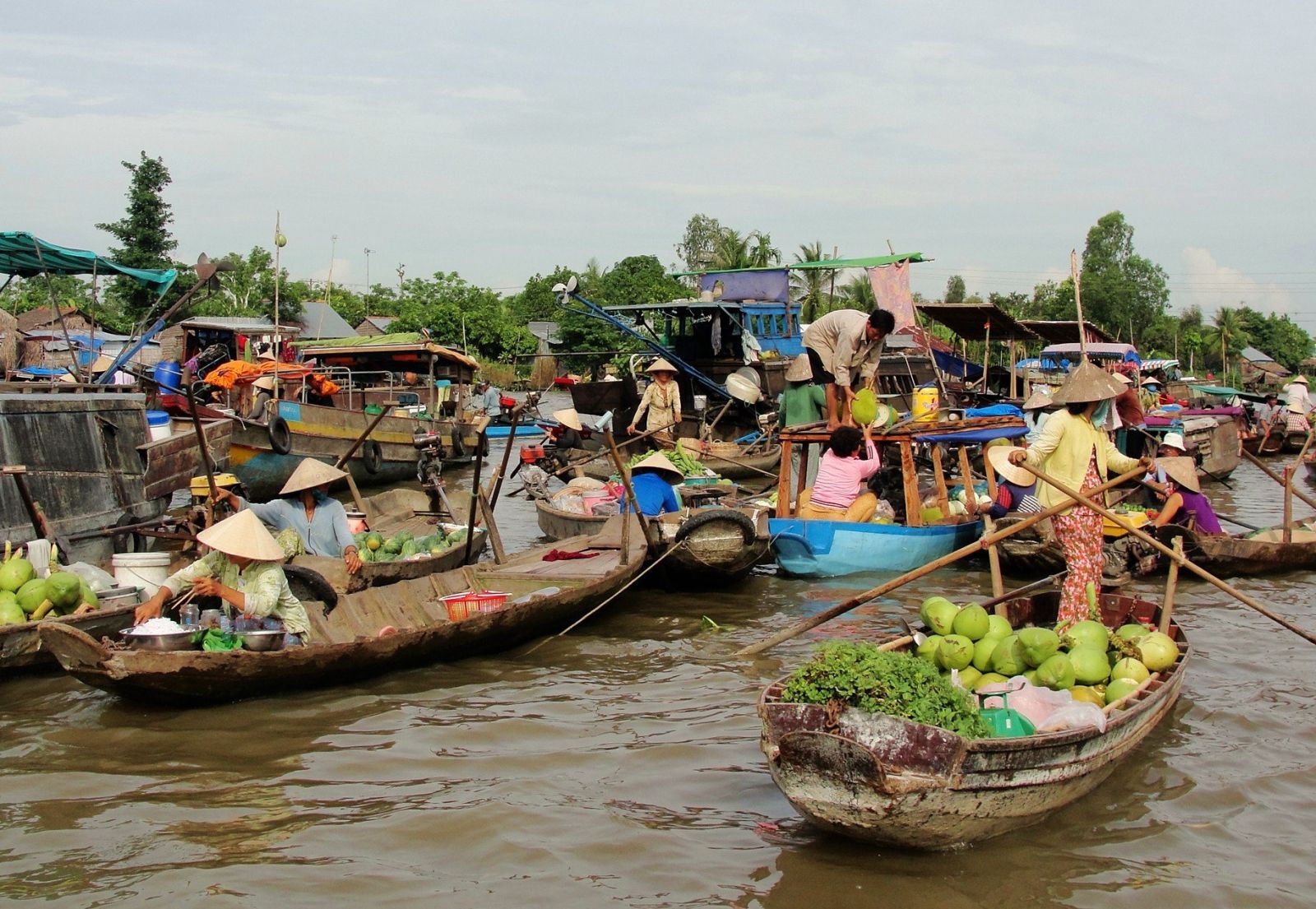
A corner of Cai Be floating market on Mekong River
Early morning is the most important part of planning a floating market trip.
For Cai Rang, travelers should aim to reach the market around 5:00–5:30 AM. This is when trading is liveliest, temperatures are comfortable, and the sunrise creates beautiful river conditions.
By around 8:00 AM, the market becomes quieter as some vendors begin to leave. Arriving late may still allow you to see boats and local activity, but you will miss the busiest period.
The dry season is comfortable for exploring the Mekong Delta, but you can visit most of the year. Seasonal changes may affect fruit availability, water levels, and weather, giving different visits their own character.
You may also like: Cai Be Tour Full-day: A rustic Mekong Delta Discovery
A local boat tour is one of the easiest ways to visit a floating market, especially for first-time travelers. A local guide can help arrange transportation, explain market traditions, and introduce you to food vendors.
If you are staying in Can Tho, consider booking a private or small-group boat. It should leave early enough to reach Cai Rang before sunrise.
Bring comfortable clothes, sunscreen, and a light jacket for the early morning. A waterproof bag can also be useful for protecting phones and cameras from splashes.
Most importantly, allow yourself time to observe rather than simply taking photographs. The most interesting part of these traditional markets is often watching how people work, communicate, cook, trade, and move goods along the river.
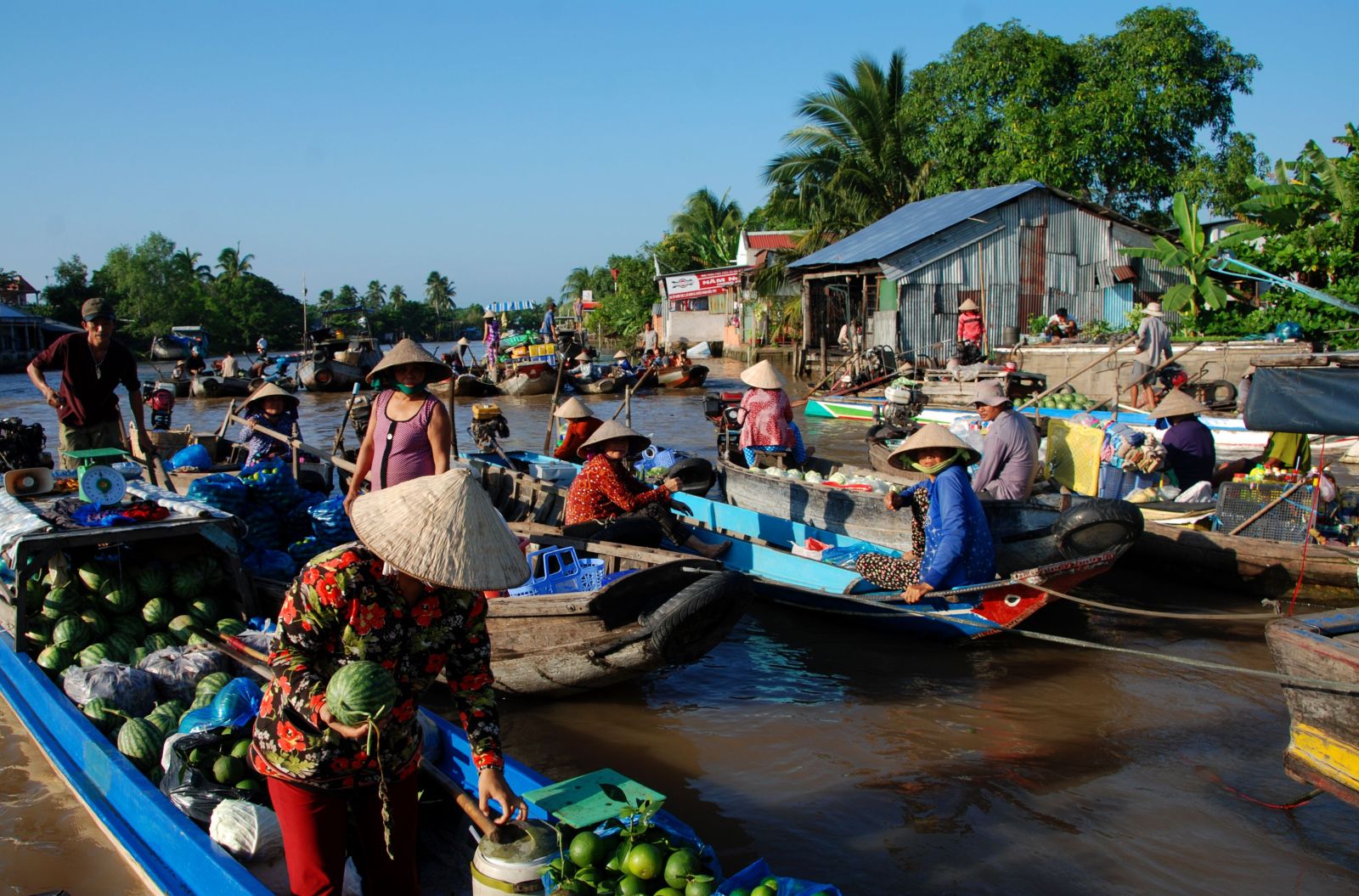
The bustling scene at a floating market in Ho Chi Minh City, Vietnam, showcases local culture and commerce
What is the best floating market in the Mekong Delta?
Cai Rang Floating Market is the most popular choice for first-time visitors. Its spot near Can Tho, early morning bustle, food boats, and colorful farm produce make it famous in Vietnam.
What time should I visit Cai Rang Floating Market?
Arrive around 5:00–5:30 AM for the liveliest atmosphere. The market is most active in the early morning and becomes quieter later in the day.
What can you eat at the floating markets in Vietnam?
Visitors can try hủ tiếu, Vietnamese coffee, fresh pineapple, tropical fruits, and other simple dishes sold directly from small boats. Food availability can vary depending on the market and season.
Can I visit a floating market from Ho Chi Minh City?
Yes. Several tours travel from Ho Chi Minh City to the Mekong Delta. However, staying overnight in Can Tho is a better choice if you want to visit Cai Rang early. You can then see the market at its busiest.
How long should I spend at a floating market?
Around two to three hours is usually enough. You can explore the market, have breakfast, enjoy a drink, and watch local life. If you want to explore surrounding villages and canals, consider spending a full day or staying overnight.
You may also like: RV Mekong Princess
The Mekong Delta floating markets offer more than a colorful photo opportunity. They provide a glimpse into a way of life shaped by rivers, agriculture, food, and community.
From watching boats gather before sunrise at Cai Rang to spotting the cây bẹo, each moment feels unique. Eat noodles on the water, sip Vietnamese coffee, and taste freshly cut tropical fruit. Every part of the trip connects travelers with southern Vietnam.
For those seeking authentic floating markets in Vietnam, the Mekong Delta is worth adding to your itinerary. Wake up early, step onto a local boat, and let the river reveal a different side of Vietnam.