English
 French
 Spanish
 Italian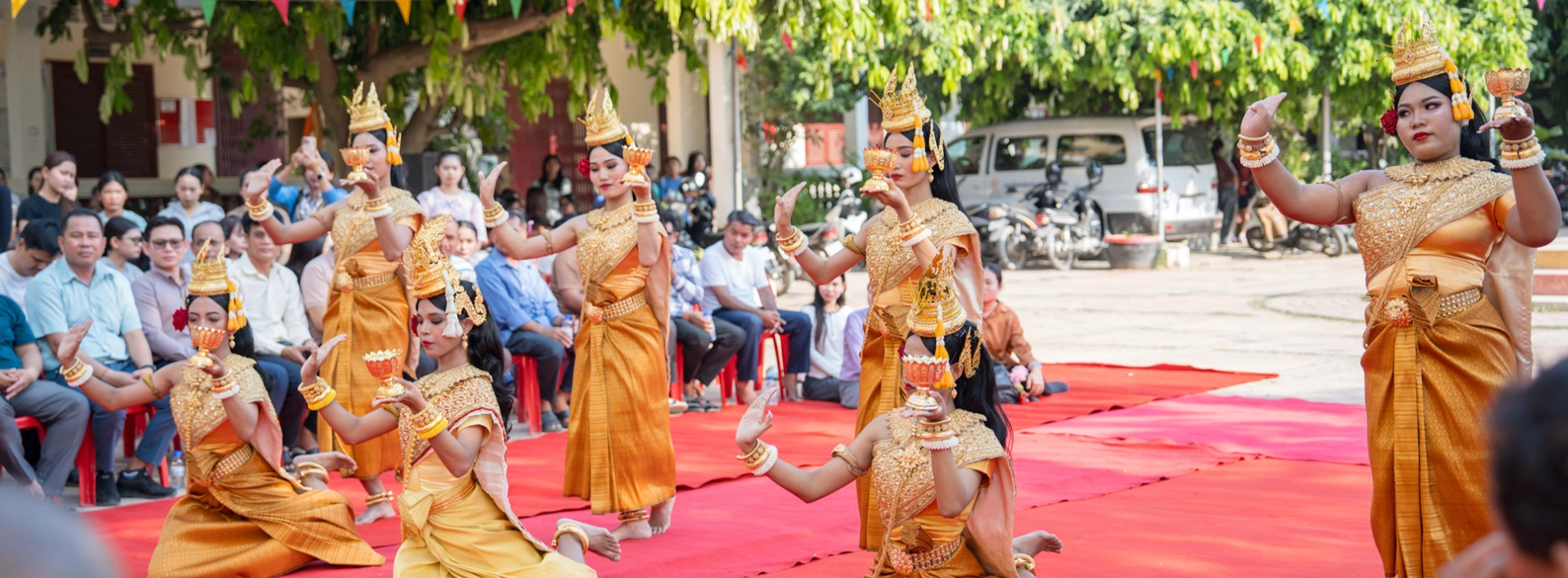
Slow hand movements, curved fingers, golden costumes and tall crowns make Apsara dance instantly recognizable. For many travelers, seeing the dancers perform is one of the most memorable cultural experiences in Cambodia.
But Apsara dance is more than a beautiful evening show. It connects to the Khmer royal court’s history, religious stories, and stone carvings across Angkor’s temples. The tradition was almost lost during the 1970s, but it was later rebuilt and continues to be performed today.
For visitors staying in Siem Reap, an evening of traditional dance can be a meaningful way to understand the culture behind the temples they have spent the day exploring.
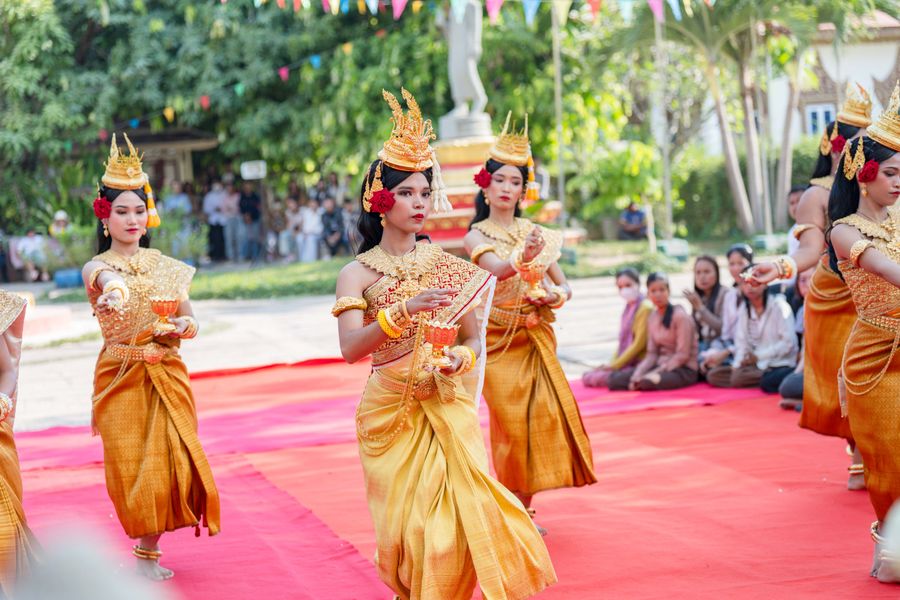
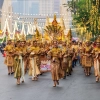
Graceful Khmer dancers in vibrant traditional costumes perform in Battambang, Cambodia
Apsara dance is part of the wider tradition of Khmer classical dance, also known as the Royal Ballet of Cambodia. The word “Apsara” refers to celestial female beings in Hindu and Buddhist traditions, often shown as graceful dancers.
In Cambodia, images of these heavenly figures appear on Angkorian temple walls. They are especially common at Angkor Wat. They also appear at other temples near Siem Reap.
The modern performance uses slow, carefully controlled movements, especially of the hands and fingers. Each movement has meaning, while the costumes, music and poses help tell a story.
It is useful to know that visitors often use “Apsara dance” as a simple name for Cambodian classical dance. Strictly speaking, Apsara is one important part of a larger classical dance tradition.
The roots of Apsara dance in Cambodia are closely connected to Khmer history and the royal court.
Cambodian classical dance came from older court and religious traditions. It was shaped by Indian culture and Hindu myths. The Apsaras, or heavenly dancers, became an important image in Khmer art. They appeared in sculpture and temple decoration.
During the Angkor period, dance had a special place in court life and religious ceremonies. Traditionally, the Royal Ballet of Cambodia performed at important events like royal ceremonies, weddings, funerals, and Khmer festivals.
This long history explains why Cambodian classical dance is not simply entertainment. It carries stories, beliefs and ideas about beauty, respect and spirituality.
One of the easiest ways to understand Apsara dance is to look closely at the temples of Angkor.
The walls and galleries of Angkor Wat and other temples contain numerous carvings of female figures with elegant poses and detailed clothing. People often associate these images with Apsaras and related divine figures.
When you later watch a dance performance, some of the poses may feel surprisingly familiar.
That connection between stone and movement is what makes Apsara dance in Siem Reap special. You can see the ancient images during the day and then watch a living performance in the evening. The experience gives you a clearer idea of how Cambodian artists have carried old ideas into the present.
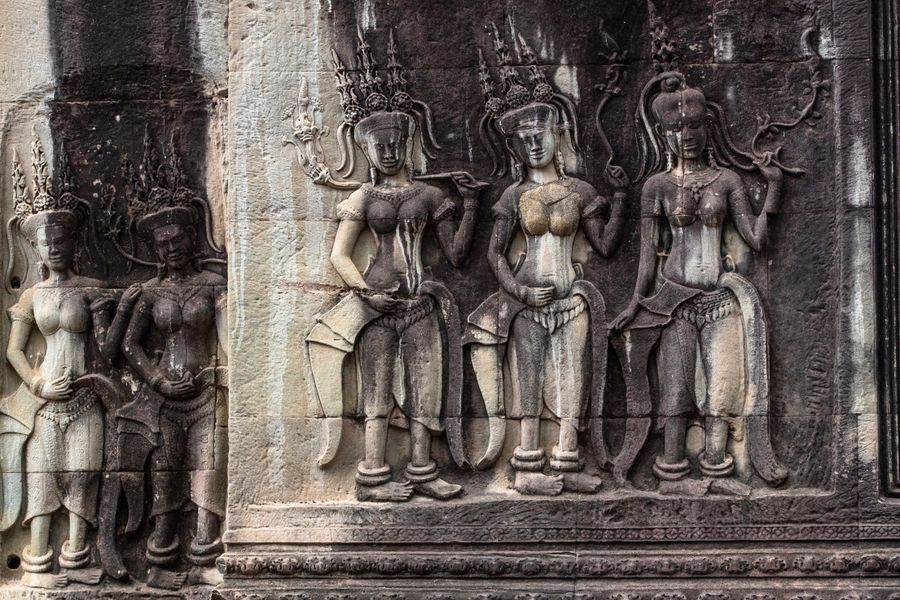
Exquisite relief carvings of Apsara dancers at Angkor Wat, Cambodia
A first-time viewer may wonder why the dancers move so slowly.
The controlled pace is part of the art. The dancers train to hold their posture, bend their fingers into precise shapes, and move their hands, arms, and body together.
These movements are not random. Different gestures and poses can help express emotions or communicate parts of a story.
Learning this type of dance takes years. Experienced teachers pass the tradition to younger generations rather than younger generations learning it simply by watching a performance.
This is also why a good performance feels calm and almost dreamlike. The beauty comes from control rather than speed.
You may also like: Angkor Trekking Tour 3 Days: Jungle Trek & Temple Discovery
The history of the dance also includes one of Cambodia's darkest periods.
During the Khmer Rouge regime in the 1970s, Cambodia lost many trained dancers, musicians and teachers. The Royal Ballet was nearly destroyed.
After 1979, surviving artists and younger generations began rebuilding the tradition. Teachers shared what they knew. Dance groups returned to the stage. Classical performances slowly became part of Cambodia’s cultural recovery.
Later, international organizations recognized the Royal Ballet of Cambodia as an important part of the country’s intangible cultural heritage.
Knowing this history changes the way you watch the dance. What may first seem like a beautiful tourist show is also part of a larger story of cultural survival.
For international travelers, Siem Reap is the easiest place to see a performance.
The city has several restaurants, hotels and dedicated theaters offering evening programs that combine traditional dance with dinner. Many shows last around 45 minutes to one hour and may include Apsara pieces alongside other Cambodian folk dances.
One established option is Apsara Theatre, which has been presenting Khmer traditional performances in Siem Reap for many years. Its programs blend classical and village dances with traditional music. This makes it a good choice for travelers who want more than a brief dance. It is not just a show between restaurant courses.
Another option is an outdoor dinner performance at one of Siem Reap's established hotels. This setting is more polished and comfortable. It suits travelers who want a quieter evening with dinner and a cultural show.
Schedules can change depending on the season, so checking the performance time on the day is a good idea.
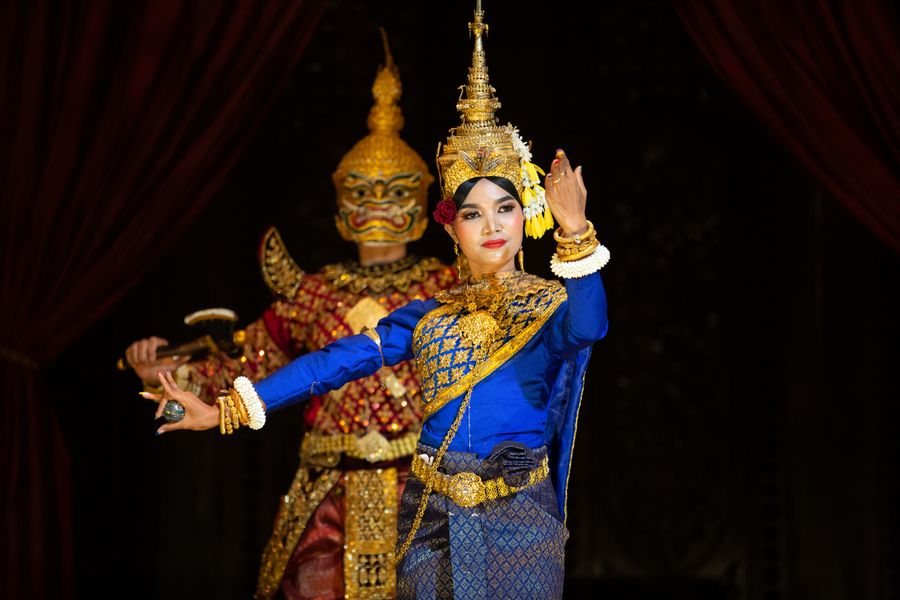
Colorful Apsara dancers perform a traditional Khmer dance in Siem Reap, Cambodia
You may also like: Siem Reap Tour 4 Days: Explore Cambodia Secret
Most performances take place in the evening, making them easy to add after a day at Angkor.
A good plan is to explore the temples in the cooler morning hours, rest during the afternoon heat, and head out for dinner around 6:30 PM before enjoying a show from 7:30 PM to 8:30 PM.
This also gives you time to notice the connection between the ancient temple carvings and the dancers.
Try not to schedule too many activities on the same evening. An Apsara performance is slow and detailed, so it is better enjoyed when you are not rushing to the next attraction.
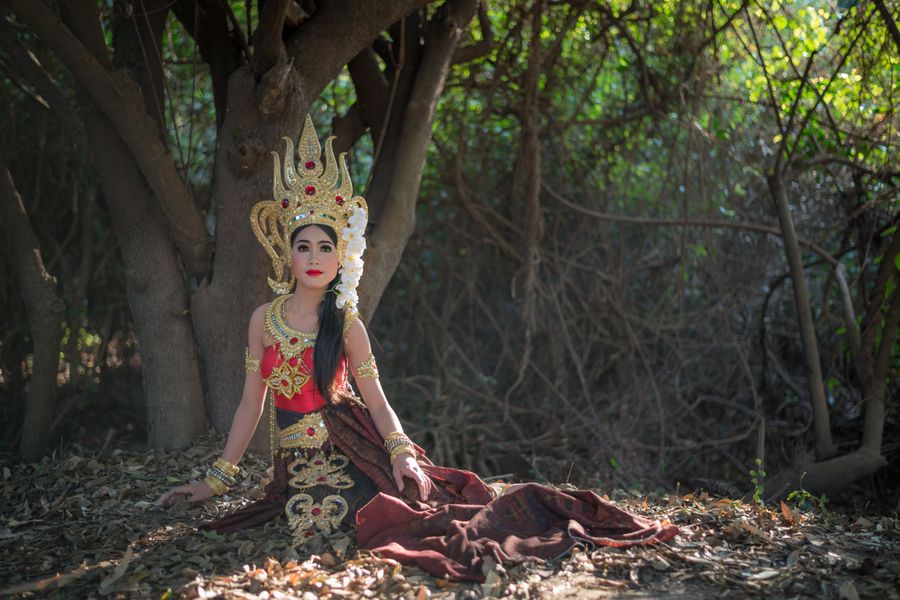
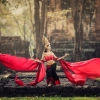
A graceful Apsara dancer in traditional attire sits amidst a serene forest landscape, exuding elegance
Instead of watching only the costumes, pay attention to the dancers' hands.
The curved fingers, small changes in wrist position and slow movement of the arms are central to the performance. Then watch how the dancers use their eyes, shoulders and body position.
The music is also important. Traditional instruments accompany the dancers, while a female chorus can help explain or comment on the story. Different characters have their own costumes, movements and appearance.
You do not need to understand every detail to enjoy the show. Simply noticing the precision and patience behind each movement will give you a better appreciation of the art.
You may also like: Cambodia Luxury Tour 6 Days: Sweetie Journey
Is Apsara dance the same as Cambodian classical dance?
Not exactly. Apsara dance is a common term visitors use for a famous Cambodian classical dance.
Khmer classical dance is a broader tradition. The Royal Ballet of Cambodia includes different characters, stories and styles. Apsara performances are one of the best-known expressions of this broader cultural tradition.
Where is the best place to see Apsara dance in Cambodia?
Siem Reap is a convenient place for travelers because shows are often held at theaters, hotels, and dinner venues. This is also where you can most easily connect the dance with the Angkor temples and the Apsara figures carved into their walls.
How long does an Apsara dance show usually last?
A typical tourist performance in Siem Reap lasts around 45 minutes to one hour, although the full evening can be longer when dinner and transfers are included. Some programs combine Apsara dance with other Khmer folk dances, so check the program before booking.
Can children enjoy an Apsara dance performance?
Yes. The colorful costumes, music, and gentle movements can interest children, especially after they visit Angkor Wat. Older children may enjoy the show more if they learn a little about Apsaras and Khmer stories first.
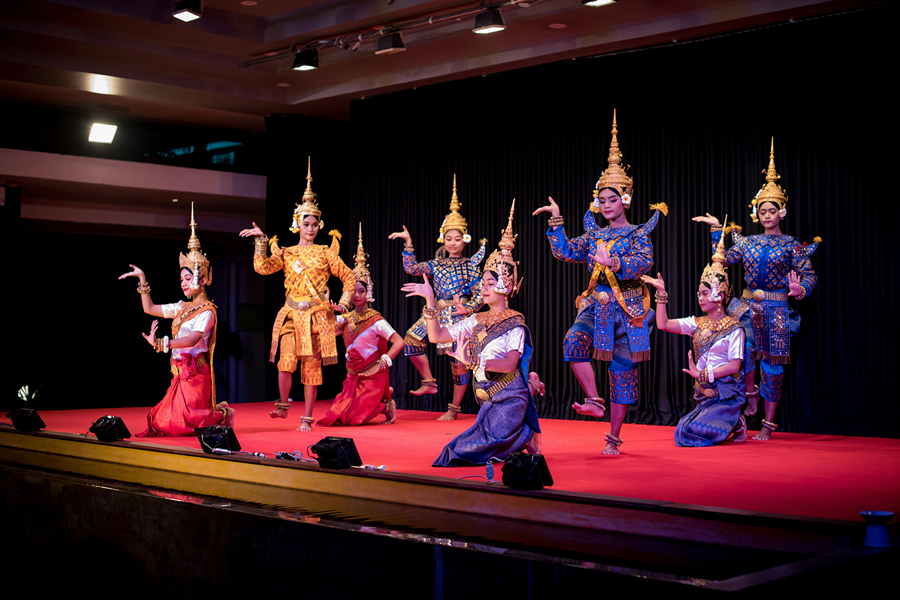
A traditional Apsara dance show
Apsara dance in Cambodia brings together the country's royal history, ancient beliefs and living cultural traditions. From the stone figures of Angkor to evening shows in Siem Reap, it gives travelers a simple, meaningful way. It helps them see how Cambodia’s past still lives today.
For a journey that combines Angkor, local culture, and traditional shows at an easy pace, contact us.
We will create a private Cambodia itinerary based on your interests and travel dates.