English
 French
 Spanish
 Italian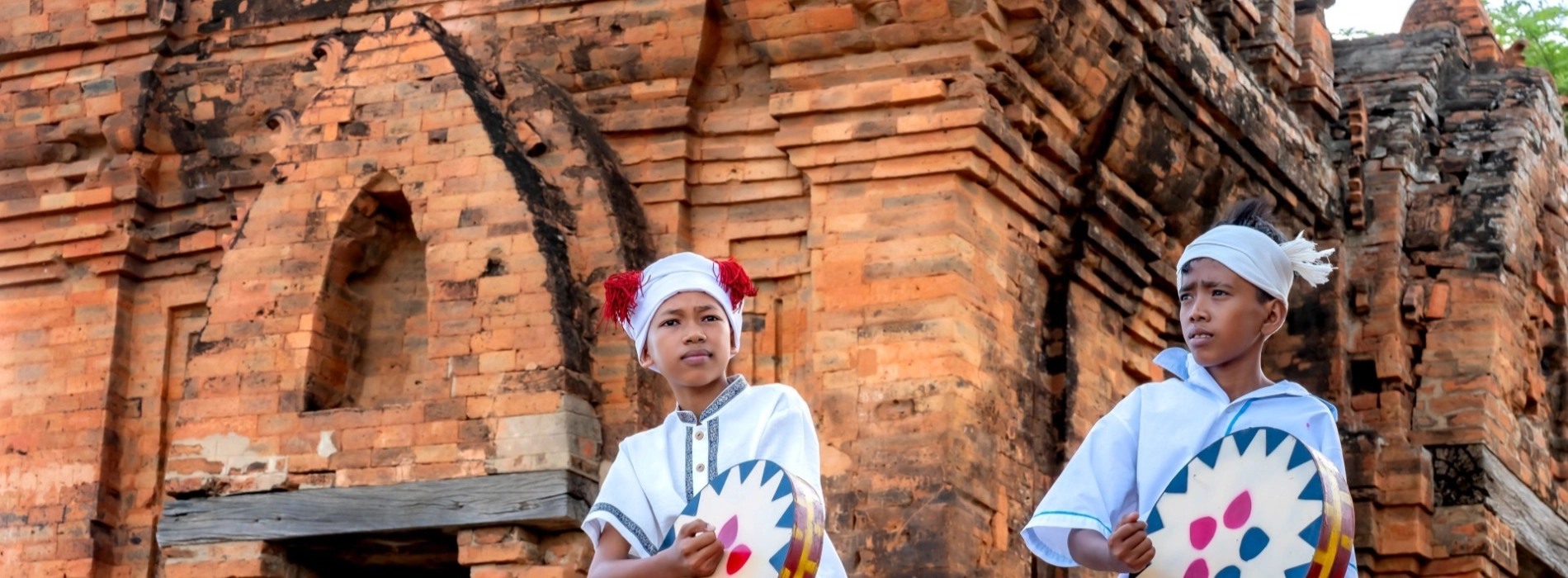
Each Autumn, the Cham towers of Vietnam come alive with sacred rituals and centuries-old rhythms. Kate Festival brings ancient legends and drumbeats to life, offering travelers a rare window into Cham culture, from temple ceremonies to family celebrations across village communities.
For Cham communities who follow the Balamon faith, Kate is far more than a public celebration. The festival has been passed down for centuries as a time to honor the divine and reconnect with one's roots.
Kate is often compared to a Tet celebration because it marks a time for family reunions, remembrance, blessings and renewal. It is listed as National Intangible Cultural Heritage, with the Ninh Thuan celebration inscribed in 2017, and remains one of Vietnam's most vivid living traditions today.
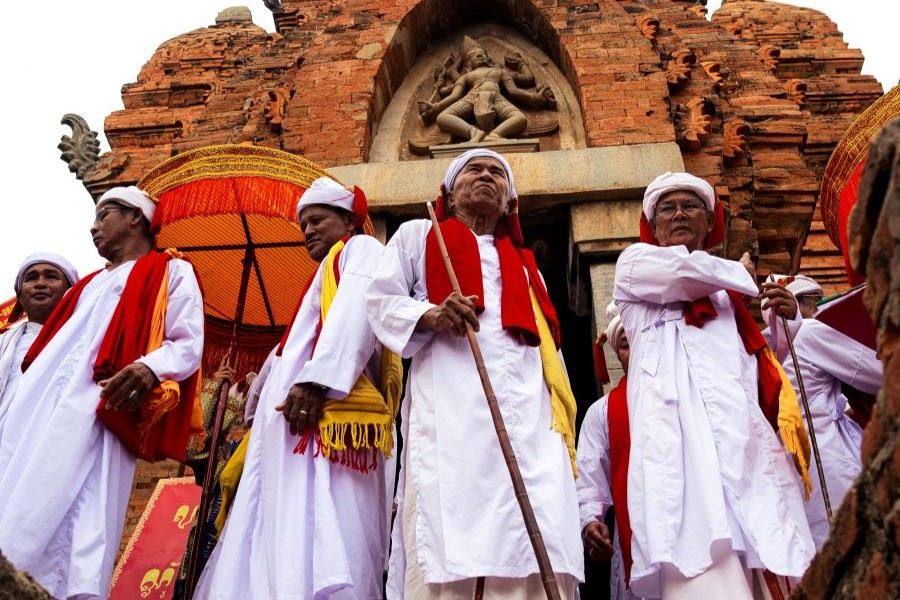
Cham religious dignitaries participating in the traditional Kate Festival
You may like: Ninh Thuan Tour Full day: A Day in Central Coast
Honoring Gods, kings and ancestors
At its heart, Kate is an act of gratitude. The festival gives the Cham community a time to honor deities, revered kings and ancestors who are remembered as important figures in the community's history and spiritual life.
Praying for rain, harvests and wellbeing
The festival also carries a deeply agricultural meaning. People pray for favorable rain, bountiful harvests and good health. These wishes are closely connected with the agricultural life of the Cham community and help explain why the festival carries such importance beyond its colorful performances and public celebrations.
Bringing families and communities together
Beyond ritual, Kate is a homecoming. Family members travel back to their home villages, wear new clothes and share meals. This sense of reunion is one reason Kate is sometimes compared with Tet in terms of its importance as a family occasion.
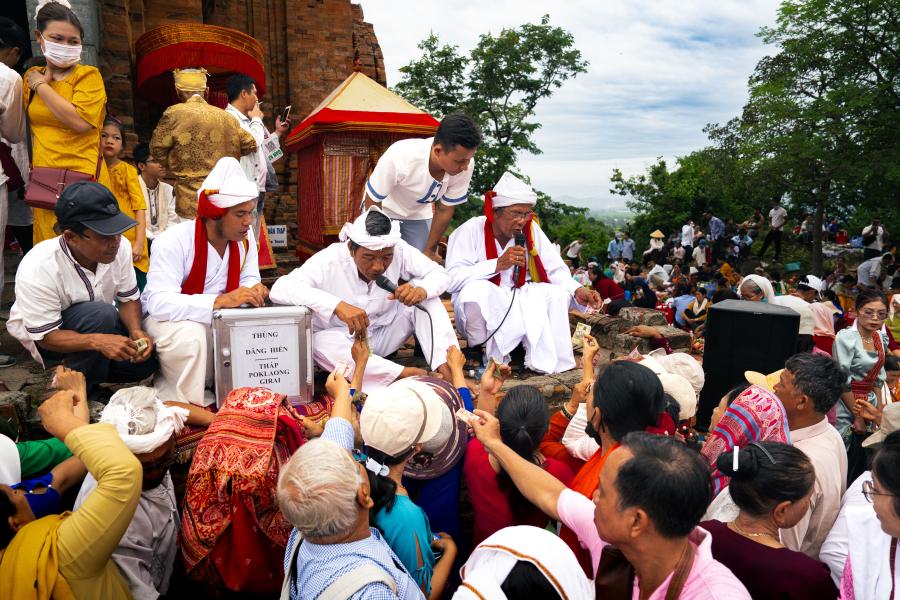
Cham people gathering together to celebrate the Kate Festival
Festival Dates
Because Kate follows the Cham calendar, its Gregorian date changes each year. The main celebration traditionally begins on the first day of the seventh month of the Cham calendar, generally around September or October. In 2026, the main holiday will fall on October 10, and celebration plans will vary by region.
Main Venues
Traditionally, major Kate ceremonies are associated with Cham religious sites in the former Ninh Thuan area, now part of Khanh Hoa Province. Important locations include Po Klong Garai Tower, Po Rome Tower, and Po Inu Nugar Temple. Kate is also celebrated in the former Binh Thuan area, now part of Lam Dong Province. Po Sah Inu Tower is an important site for the local Cham community's annual Kate celebrations.
Kate Festival in 2026
In 2026, activities in Khanh Hoa are scheduled to take place from October 5 to 12 at the Po Klong Garai and Po Rome towers. In Lam Dong, the Kate Festival is scheduled for October 9 to 12, with activities at Po Sah Inu Tower and the Cham Cultural Exhibition Center in Bac Binh Commune.
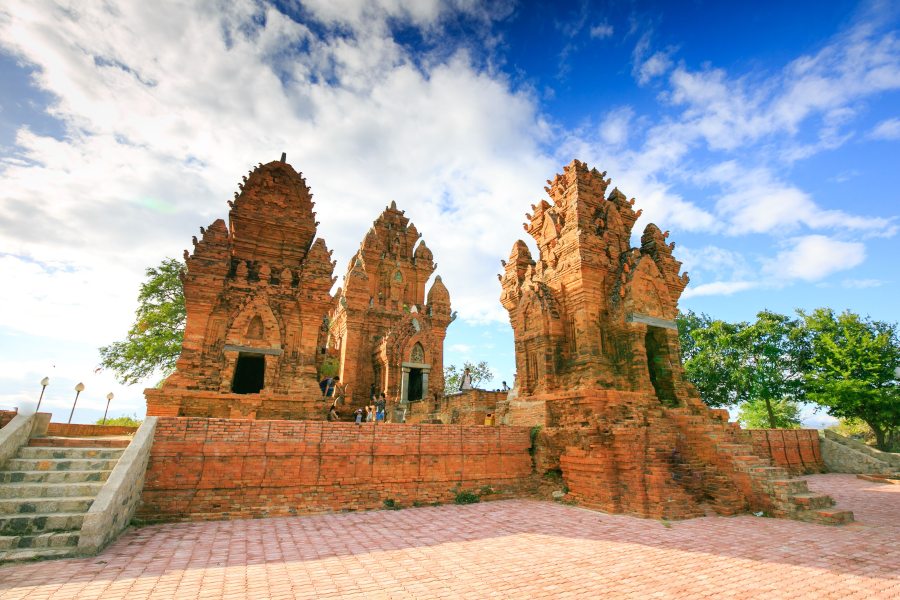
Po Klong Garai Temple, Khanh Hoa Province
You may like: Quy Nhon Tour 4 Days: Hidden Beaches & Cham Heritage
The heart of Kate unfolds in three stages - temple, village, and family - each one bringing the celebration closer to home.
The festival opens with a solemn procession: the Raglai people, long-time guardians of the gods' ceremonial robes, carry them from their villages to the Cham towers. It's a striking sight, and one that captures just how interconnected these communities remain.
Once the garments arrive, a ritual opens the temple doors for the year's most significant ceremony. Priests, musicians and villagers gather in the courtyard as the towers, usually quiet, come alive again.
Inside, priests perform a purification ritual, bathing the sacred statue before dressing it in the newly arrived garments. This part of the ceremony is considered especially sacred, and photography is often restricted here out of respect.
In the morning, the main offering ceremony takes place. Fruit, rice and traditional dishes are presented to the gods, accompanied by chanting and music that fills the temple grounds.
Once the main tower ceremonies are completed, the celebration continues within Cham villages and families. Families gather for meals, exchange blessings and welcome relatives home, closing the festival in a warm, joyful atmosphere.
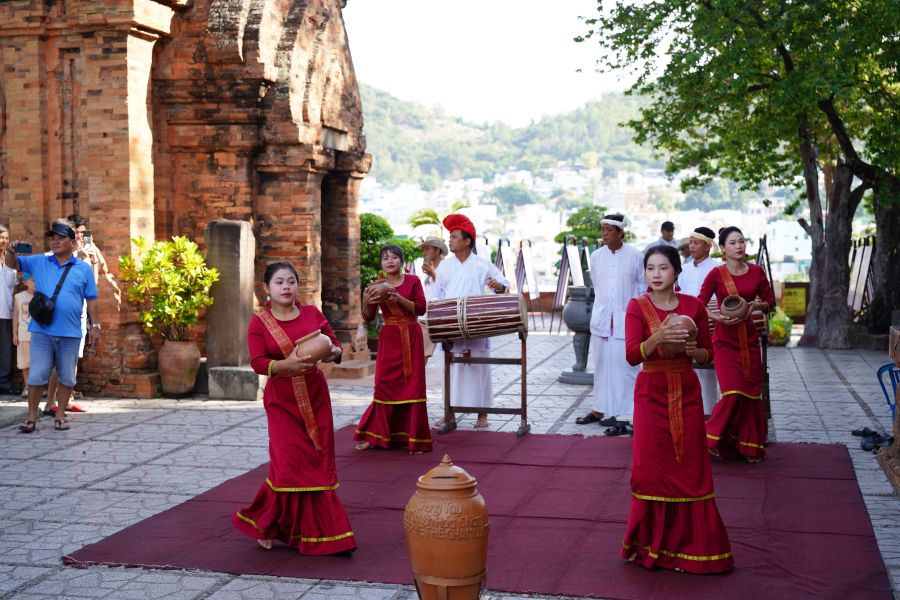
Discover the Kate Festival at a sacred Cham Tower
Few festivals in Vietnam offer such an unfiltered window into a living religious tradition. From the sacred garment procession to the offering ceremony at dawn, travelers can witness rituals that have remained largely unchanged for centuries. It's a rare chance to observe Cham spirituality exactly as it has always been practiced.
The sound of the Ginăng drum and Saranai horn is inseparable from Kate Festival. It fills the temple courtyards from the earliest morning rituals through to the evening celebrations. For many visitors, this hypnotic rhythm is what lingers longest after the festival ends.
Vibrant fan dances performed by Cham women, alongside ceremonial robes in deep reds and golds, turn the temple grounds into a moving display of color and grace. These performances aren't just entertainment, each movement and costume carries symbolic meaning rooted in Cham mythology.
Cham towers such as Po Klong Garai, built in the late 13th century, remain in remarkable condition. Visiting during the festival is very different from an ordinary day, the architecture stays the same, but the surrounding cultural life becomes far more visible.
Nearby Cham villages such as Bau Truc and My Nghiep, in Ninh Phuoc, add another layer. Here, festival preparations, village rituals and family gatherings show how Kate lives on beyond the towers.
Local artisans often set up demonstrations during the festival period, offering visitors a hands-on look at traditional Cham pottery shaped without a wheel, and intricately patterned brocade woven on traditional looms. Watching these techniques up close, and perhaps picking up a handmade piece, is one of the most tangible ways to bring a bit of Cham heritage home with you.
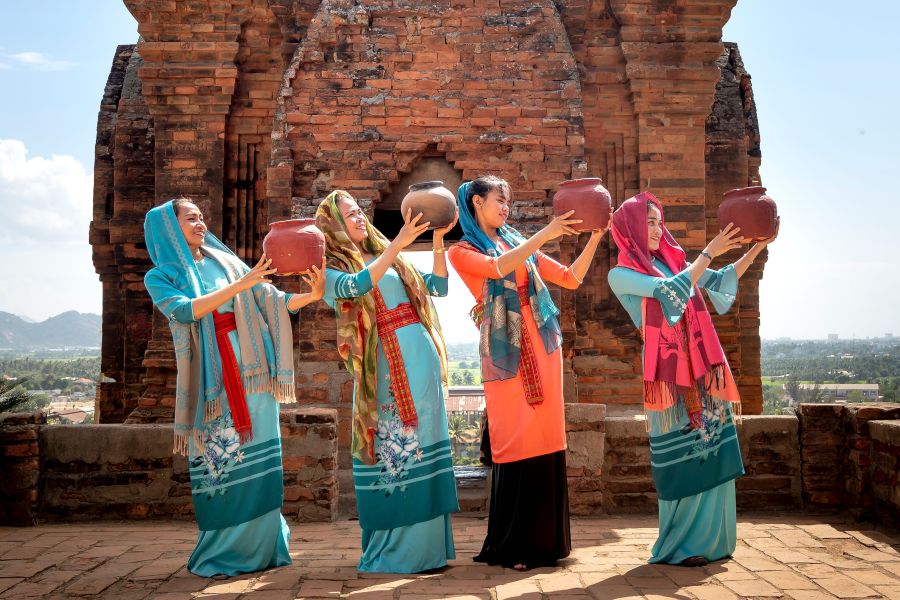
Traditional Cham dance performance at the Kate Festival
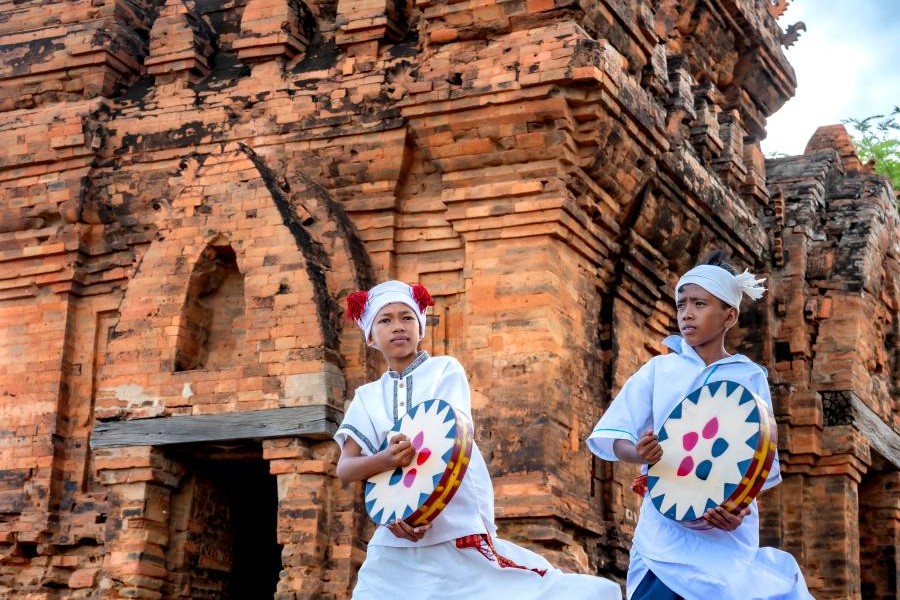
Traditional musical instruments played during the Kate Festival of the Cham people in Vietnam
Is the Kate Festival open to foreign visitors?
Foreign travelers can visit and learn about Cham culture during Kate celebrations. However, visitors should remember that it is primarily a religious event, so local rules and instructions should always be respected.
What should I wear when visiting the Cham towers?
Choose modest, comfortable clothing, particularly when visiting during religious ceremonies. Covered shoulders and knees are a respectful choice when entering or observing sacred spaces.
Is the Kate Festival the same every year in different Cham regions?
The festival follows the Cham calendar and shares important traditions, but local communities may organize different ceremonies, activities and public programs. You should check the local program before traveling.
How many days should I spend to fully experience the Kate Festival?
There is no fixed answer because programs vary by location. Spending two to three days around a specific local celebration can give you enough time to experience the main ceremonies and explore nearby Cham cultural sites.
Kate Festival offers travelers a chance to discover a side of Vietnam that goes beyond famous landscapes and historic attractions. From ancient towers and sacred rituals to traditional music, crafts and family gatherings, each part reveals another layer of Cham culture.
If this is the kind of authentic, meaningful travel experience you're looking for in Vietnam, let Asia King Travel help you plan a journey to Kate Festival 2026 that goes far beyond the ordinary itinerary.
You may like: Ninh Thuan Tour 3 Days: Explore Nature & Seaside Beauty