Laos Tour 5 days: A complete journey to discover Laos
By Quynh Trang · Published · Updated
Table of contents
Traveling to Laos reveals fascinating stories. Join Asia King Travel for a Laos tour 5 days to discover prominent tourist attractions in this country.
Laos, officially known as the Lao People’s Democratic Republic, is a country located in central Southeast Asia. With a diverse history and rich culture, Laos is a destination that attracts the attention of tourists from all over the world. Furthermore, Laos’ natural scenery will enchant you, with its enormous waterfalls, gorgeous mountains, and lush woods. Since the Laos-China high-speed railway opened, Vientiane, Vang Vieng and Luang Prabang are only one to two hours apart, which makes a 5-day trip far more relaxed than it used to be.
Day 1: Vientiane Capital
Arrive in Laos’ capital city and see Patuxai Square, an iconic emblem of Vientiane.
Patuxai is also known as the “Victory Gate” or “Arc de Triomphe Gate of Vientiane” since it was built in the 1950s and 1960s. This is an extraordinary architectural effort that combines ancient Lao architectural style with elements of the Arc de Triomphe Gate in Paris, France. Climb the stairs to the top terrace for a view over Lane Xang Avenue; a small entrance fee applies.
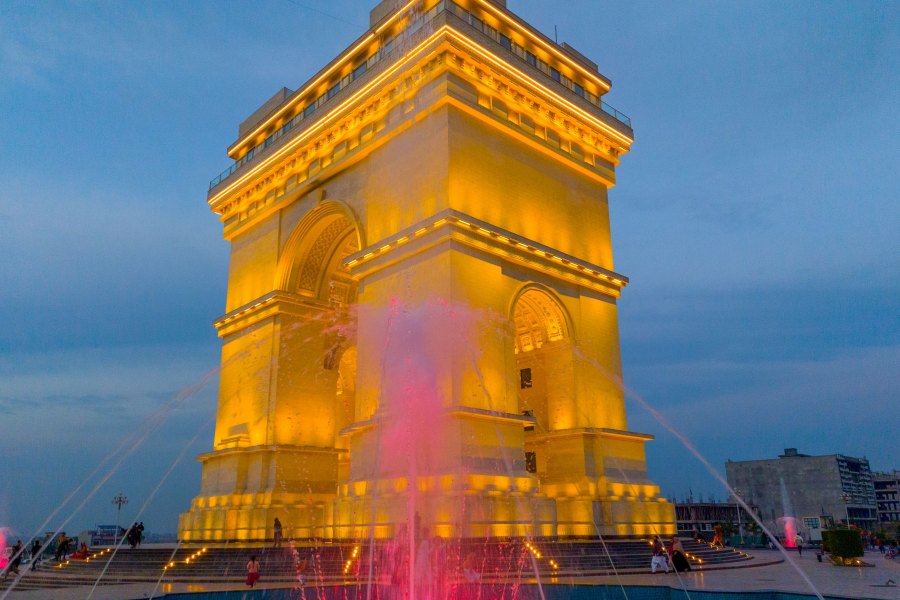
Patuxai, the Victory Gate of Vientiane
Visit That Luang Temple, a famous Buddhist architectural work and a national symbol of Laos. That Luang is regarded as one of Southeast Asia’s most prominent Buddhist structures, and it appears on numerous Lao postcards and banknotes.
Every year, around the full moon of the 12th lunar month (usually November), Laos celebrates Boun That Luang, the country’s most important Buddhist festival, with processions, almsgiving and a trade fair. In 2026 the festival runs from 21 to 24 November. This celebration draws a great number of visitors and Buddhist devotees from all over.
Day 2: Explore the land of Luang Prabang
Take a morning high-speed train from Vientiane to Luang Prabang. The trip takes about 1 hour 50 minutes.
Luang Prabang is a well-known historical and cultural city in Laos, located in the country’s north, approximately 300 kilometers from the capital Vientiane. UNESCO designated this city as a World Cultural Heritage Site in 1995 due to its stunning architecture and preservation of many important historical and cultural monuments.
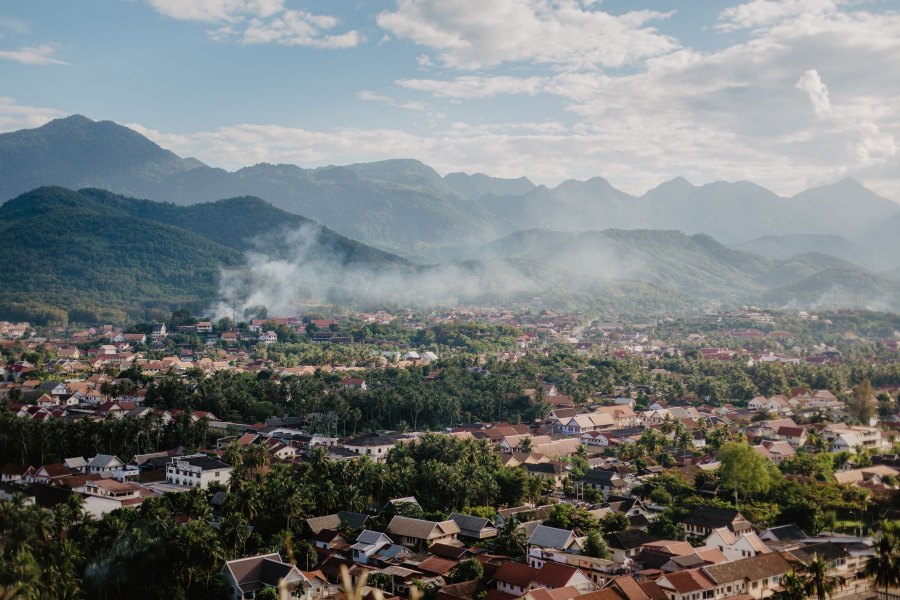
Luang Prabang, a UNESCO World Heritage town surrounded by mountains
First, you can visit Wat Xieng Thong Temple, one of Luang Prabang’s Buddhist temples, built around 1560, which has excellent architecture and finely carved Buddha sculptures.
Then, visit the Royal Palace. This was once the home of Lao monarchs, but is now a museum showing relics from Luang Prabang’s history and culture. Shoulders and knees must be covered, and bags and cameras are left at the entrance.
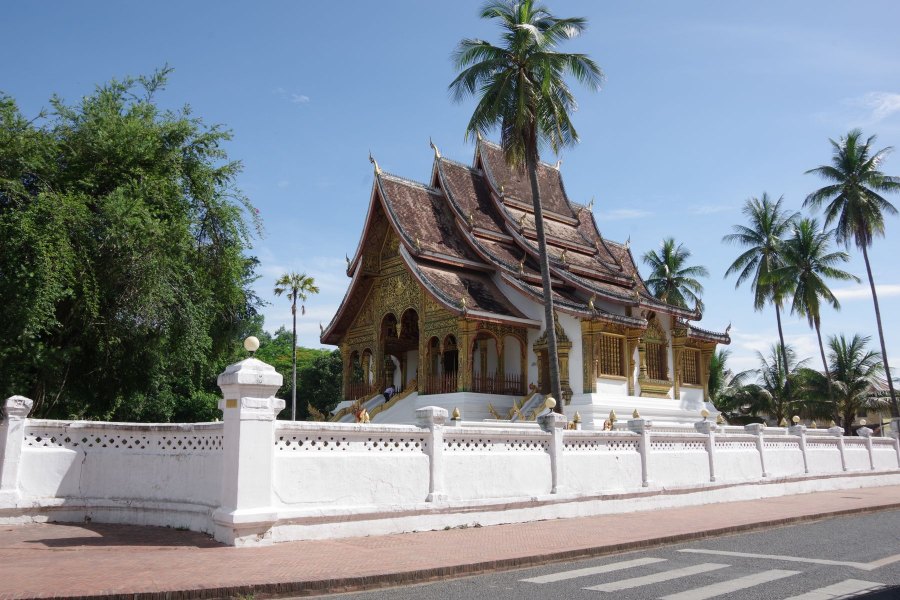
The Royal Palace Museum in Luang Prabang
Luang Prabang is particularly well-known for its distinct culinary experiences, night markets, and activities such as Mekong River boating and visits to ethnic communities. This city is great for travelers who wish to see Laos’ traditional legacy while also enjoying the country’s magnificent natural landscape.
Day 3: Continue your journey of discovery Luang Prabang
Get up before dawn to watch the Tak Bat alms-giving ceremony, when lines of monks walk through the old town to receive sticky rice from local people.
People and tourists frequently prepare food, such as rice, flowers, and other meals, and then sit on both sides of the road to await the monks. When monks walk by, they take these presents quietly and gravely.
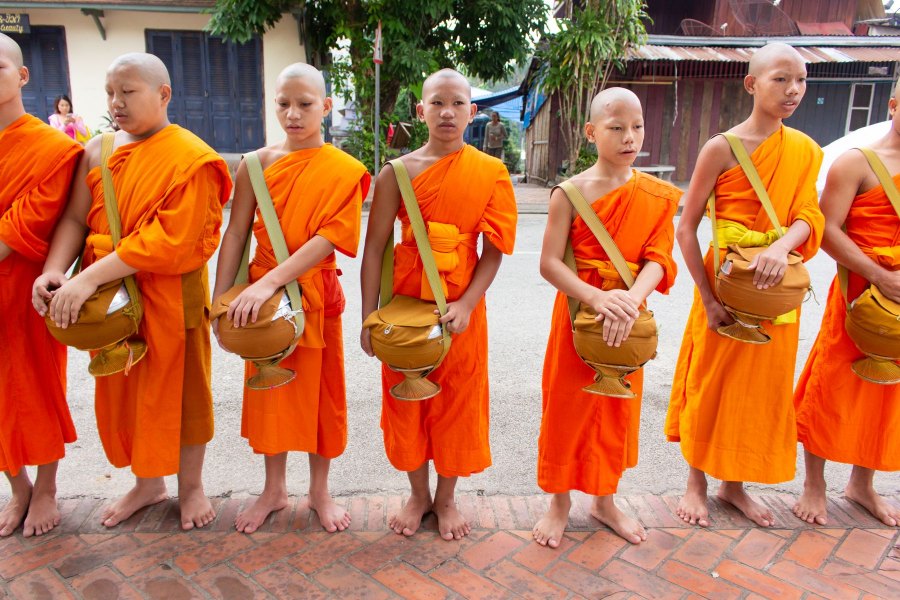
Young monks with their alms bowls in Luang Prabang
If you want to join the Tak Bat morning, remember to follow the rules such as not disturbing the monks, not taking photos close to the monks’ faces, and making sure you have a respectful and discreet attitude throughout this experience. Only take part if you are sincere: dress modestly, buy sticky rice from a reputable source rather than street vendors, never put money in the bowls, and turn off your flash. Otherwise, watch quietly from across the street.
Visit Kuang Si Falls, where you can bathe in turquoise pools and enjoy beautiful waterfalls. The site is about 30 km from town (around 45 minutes by car), and the entrance fee is about 60,000 kip, which also covers the Free the Bears rescue center at the entrance.
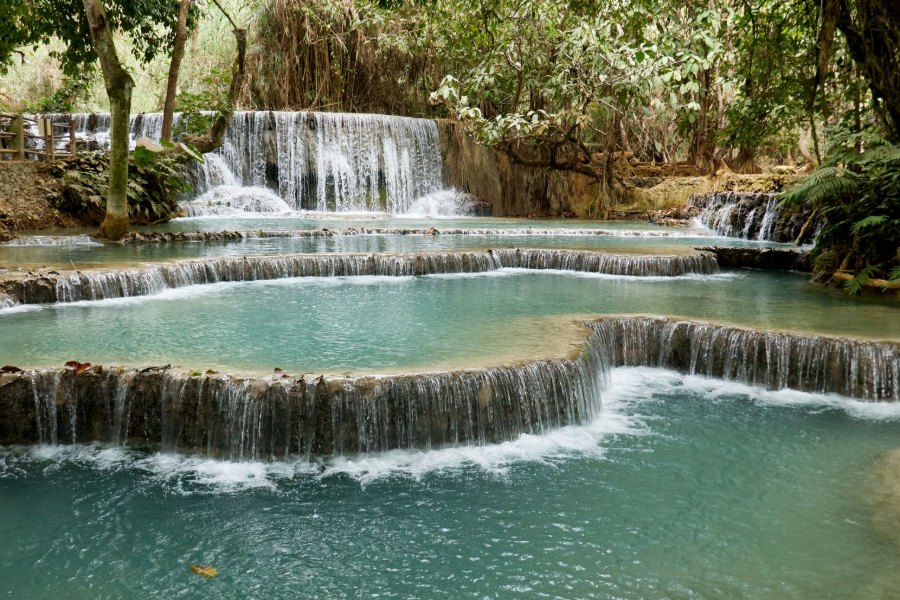
The turquoise pools of Kuang Si Falls
At the foot of the Kuang Si waterfall, there is a huge pool where you may bathe in fresh, clear water. This makes Kuang Si waterfall a great stopover on hot summer days.
In addition to the main waterfall and lake, the region surrounding Kuang Si waterfall has picnic places, cafés, and woodland walks.
Day 4: Experience new activities in Vang Vieng
Ride the train south from Luang Prabang to Vang Vieng, a journey of under an hour. Vang Vieng is a little hamlet nestled in the stunning natural scenery of Laos. The town is famous for its breathtaking views of mountains, rivers, and adjacent national parks, as well as its adventure activities and outdoor fun.
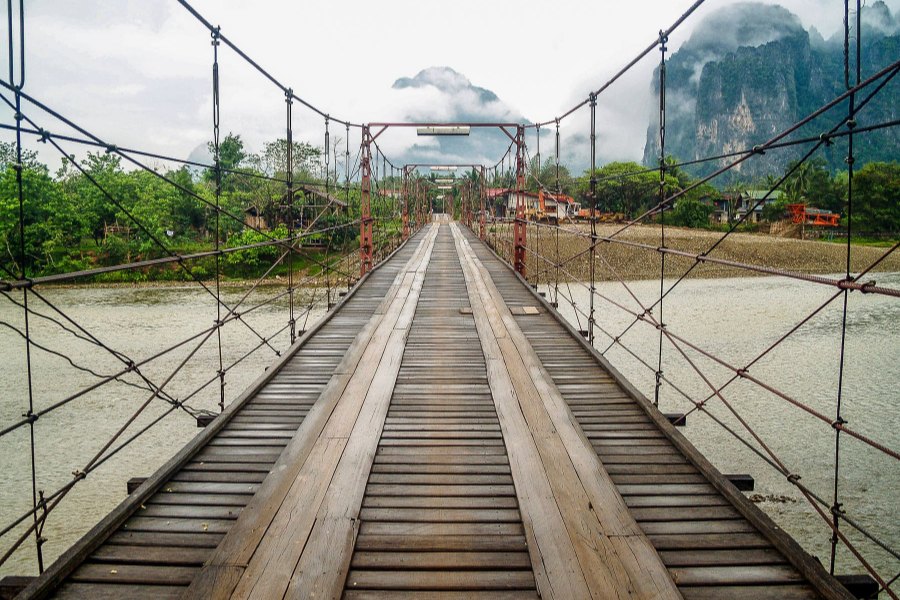
Vang Vieng’s misty karst mountains above the Nam Song River
Visit Tham Phu Kham cave and enjoy the beautiful scenery from above.
Tham Phu Kham Cave is about 7 kilometers west of Vang Vieng’s city, on top of a mountain and surrounded by lush mountains. To reach the cave, ascend around 200 stone stairs. This climb can be difficult and exhausting, but it is rewarded with breathtaking views and a one-of-a-kind experience upon completion. At the foot of the hill is the Blue Lagoon, a turquoise swimming hole popular for a cool dip after the climb.
Experience extremely interesting outdoor activities:
- Kayaking and rafting on the Nam Song River: The Nam Song River runs through Vang Vieng, providing great conditions for kayaking, rafting, and riverside camping.
- Participate in adventure activities: Vang Vieng is a paradise for adventure lovers, with activities like rock climbing, mountain biking, and even cave swimming.
- Hot-air balloon ride: early-morning and late-afternoon flights over the karst peaks are one of the best ways to see the valley. Book with an established operator and check the safety briefing before you fly.
Day 5: Return to Vientiane and depart
Take a morning train back to Vientiane (about 1 hour) in time for your onward flight. If your flight leaves in the evening, spend a few hours at Wat Si Saket, the oldest surviving temple in Vientiane, or at Buddha Park (Xieng Khuan) by the Mekong, about 25 km from the city center.
Suggested for you: Laos Luxury Tour
Must-try cuisine of Laos tour 5 days
A wonderful journey is essential for learning about cuisine. Here are the specialty foods at tourist attractions that you must sample while visiting a 5-day tour in Laos.
- Laap (Laab): Laap is a meat salad made from beef, chicken or pork, marinated and served with raw vegetables, vegetable leaves and spices such as fish sauce, lime leaves and chili.
- Mok Pa (Steamed Fish in Banana Leaves): A traditional Lao dish, mok pa is fish steamed in banana leaves with spices such as fish sauce, lime leaves and chili.
- Khao Soi (Luang Prabang style): a noodle soup made with wide rice noodles in a clear broth, topped with a rich minced pork and tomato chili paste. It is a classic breakfast in Luang Prabang and quite different from the curry-based khao soi of northern Thailand.
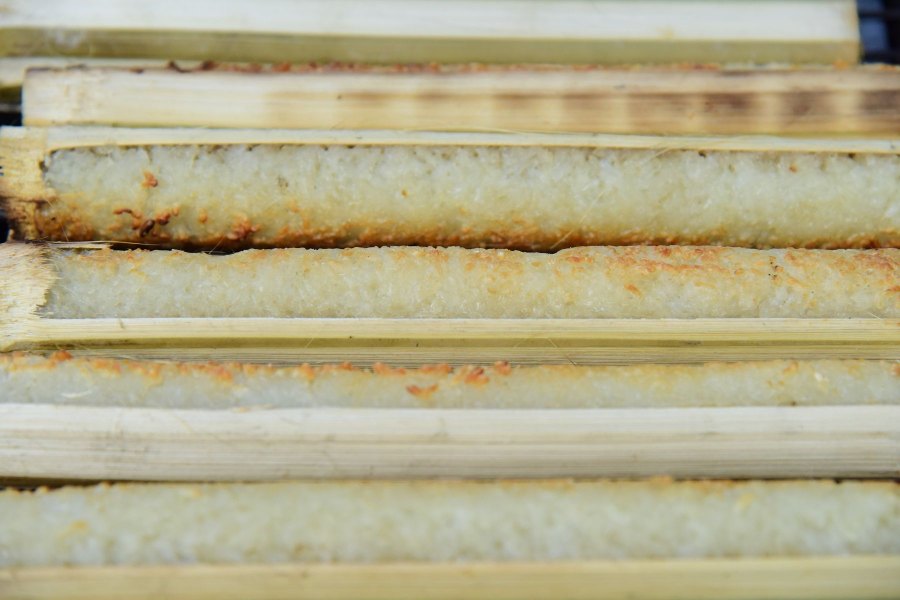
Sticky rice, served with almost every Lao meal
The best time to visit a 5-day tour in Laos
Laos has a tropical monsoon climate with two distinct seasons each year. The rainy season runs from May to October. The dry season lasts from November to April and is the most popular time to visit. From November to February, days are pleasant and mornings can be cool in the north, around 10–15°C in Luang Prabang. March to May is hot, often above 35°C, and March–April can bring smoky haze from crop burning in the north.
Laos is also known as the nation of festivals, with several important holidays and festivals occurring throughout the year. You might also opt to visit Laos around these seasons to experience the festive atmosphere:
- Boun Pi Mai (Lao New Year): 14–16 April, with water fights and temple ceremonies, especially lively in Luang Prabang.
- Boun Ok Phansa (end of Buddhist Lent): October (5 October in 2026), with the Lai Heua Fai fire boats in Luang Prabang and boat races in Vientiane the next day.
- Boun That Luang: around the full moon of the 12th lunar month, 21–24 November in 2026, in Vientiane.
- Hmong New Year: usually in December, celebrated in Hmong villages around Luang Prabang and Xieng Khouang.
Transportation for a Laos tour 5 days
High-speed train: the backbone of this route
The Laos-China Railway links Vientiane, Vang Vieng and Luang Prabang in about one to two hours per leg, replacing bus rides of 4 to 10 hours. Book through the official LCR Ticket app or at ticket offices in town, bring your passport, and arrive at the station at least 45 minutes early for airport-style security. Stations are outside the town centers, so allow extra time for the transfer.
Public Long-Distance Buses
If you want to save money on your vacation, try taking public transportation. However, public ground transportation in Laos is time-consuming. Since the railway opened, buses and minivans are mainly useful for routes the train does not reach, such as Phonsavan or Nong Khiaw.
Private car with driver
For station transfers, Kuang Si Falls and day trips, a private car with a driver is the most comfortable option, especially for families and small groups. Self-driving is not recommended for short visits: road conditions vary, and you need an International Driving Permit valid in Laos.
FAQ: Laos tour 5 days
Do I need a visa for Laos?
Most visitors do. You can apply online for a 30-day eVisa (USD 50 for most nationalities) at laoevisa.gov.la, or get a visa on arrival at Vientiane and Luang Prabang airports, paid in US dollars cash. Citizens of ASEAN countries, Japan and South Korea can enter visa-free for 30 days. Since September 2025, all visitors must also complete the online Lao Digital Immigration Form (LDIF) at immigration.gov.la within 3 days before arrival.
Should I bring kip, US dollars or Thai baht?
Use Lao kip (LAK) for everyday spending. US dollars and Thai baht are accepted at some hotels and tour desks, but the rates are poor, so pay in kip at markets, restaurants and for tuk-tuks. ATMs limit each withdrawal and charge a fee every time, so withdraw larger amounts at once. Keep clean US dollar notes for a visa on arrival.
What should I wear when visiting temples?
Cover your shoulders and knees, and remove your shoes and hat before entering a temple hall. Keep your voice down at places of worship. Keep a respectful distance when talking to monks; women should not touch a monk or hand things to him directly.
Is 5 days enough for Laos?
Five days is enough for Vientiane, Luang Prabang and Vang Vieng, because the high-speed train links them in one to two hours. Add two days if you want to fly to Xieng Khouang for the Plain of Jars, or more for southern Laos.
How far in advance should I book train tickets?
Tickets go on sale only a few days before travel and sell out quickly in high season (November to February and around Lao New Year). Book as soon as sales open, using the LCR Ticket app or a ticket office in town, and bring the same passport you booked with.
Conclusion
A Laos tour 5 days provides an ideal blend of cultural exploration, natural beauty, adventure, and cost. Whether you’re a history buff, an adventure seeker, or simply want to experience the Laos people’s warmth and kindness, a 5-day tour to this interesting nation will be gratifying and unforgettable.
Suggested for you: Thailand & Laos Luxury Tour